
Optical Materials: Computational Methods

Research group | Prof. Dr. Annika Bande

Image Image Image

Modern materials discovery relies on methods from computational chemistry and data science. Our theoretical research focuses on optical and quantum materials, examining light–matter interactions – from spectroscopic analysis to quantum-dynamics state control.
Using laser pulses and electron scattering, we induce electronic motion to initiate chemical reactions via charge migration or energy transfer. Our group is developing the modular electron-dynamics code Jellyfish, which simulates, analyzes, and visualizes electronic processes. We also advance our methodologies through the use of quantum algorithms.


Spectroscopy reveals the chemical structure and behavior of materials and nanoparticles, from atoms and molecules to nanostructures and solids. We employ electronic-structure methods in conjunction with machine learning to predict and interpret spectra in collaboration with our experimental partners.

Recent research highlights include:

  1. X-ray characterization of materials and nanoparticles
  2. Energy transfer between chromophores and nanoparticles
  3. Interparticle Coulombic decay and electron capture in quantum dots and gas clusters
  4. Assembly and functionality of battery materials
  5. Orientation of large molecules on surfaces

Our interdisciplinary cooperations on optical materials are within the Cluster of Excellence PhoenixD of Leibniz University Hannover, while our work on quantum materials is carried out within the Helmholtz-Zentrum Berlin. Through our ongoing collaborations and advancements in computational methods, we are committed to expanding the frontiers of optical and quantum materials research.

Our research: Theory of Electron Dynamics and Spectroscopy

21st Century Method Development

New theoretical chemistry methods based on Schrödinger's equation are constantly being applied and developed in our group, allowing us to accurately and efficiently probe the atomic and subatomic behavior of materials, offering a window into their optical characteristics and insight into their potential usage in devices for optics or quantum applications .

While these traditional quantum chemistry methods are powerful, they can be computationally expensive and time consuming. This challenge has driven the growing interest in machine learning (ML) , which holds the promise to significantly reduce computational effort. This requires a clever development of ML schemes integrating physical and chemical information into algorithms for small data sets. We target domains of quantum chemistry , from property prediction , over quantum dynamics , to the analysis of spectroscopy .

The simulation of adaptive optical and quantum materials requires quantum-mechanical electron-dynamics methods. In this context, our group has developed Jellyfish , a wave-function-based software. It serves as an intuitive program to execute laser-driven chemistry and visualize electronic motion . Jellyfish's cutting-edge algorithms make use of quantum-computing routines .

Literature:

"Developing Electron Dynamics into a Tool for 21st Century Chemistry Simulations " , A. Bande , Chemical Modeling 17 , 91 (2023), 10.1039/9781839169342-00091 .

"Electron dynamics simulation with wave functions for materials applications", A. Bande,  Trend report Theoretical Chemistry, Nachrichten der Chemie 72, 48 (2024), doi.org/10.1002/nadc.20244145393

"Integrating Explainability into Graph Neural Network Models for the Prediction X-ray Absorption Spectra" , A. Kotobi, K. Singh, D. Höche, S. Bari, R. Meißner, A. Bande, J. Am. Chem. Soc. 145 , 22584 (2023), 10.1021/jacs.3c07513 . Software: https://github.com/AI-4-XAS/XASNet-XAI , Data: https://zenodo.org/records/8276902

"JELLYFISH: a modular code for wave function-based electron dynamics simulations and visualizations on traditional and quantum computing architectures " , F. Langkabel, P. Krause, A. Bande, WIREs Comput. Mol. Sci. 14 , e1696 (2024), 10.1002/wcms.1696 .
Software:
https://github.com/FabianLangkabel/Jellyfish

"Accelerating Wavepacket Propagation Simulations in Quantum Dynamical Systems with Machine Learning" , K. Singh, KH Lee, D. Peláez, A. Bande, J. Comput. Chem. 1, (2024) 10.1002/jcc.27443 . Software and Data: https://github.com/kanishkasingh1993/MLDynamics

"A Quantum-compute Algorithm for the Exact Laser-driven Electron Dynamics in Molecules", F. Langkabel, A. Bande , J. Chem. Theo. Comput . 18 , 7082 (2022), 10.1021/acs.jctc.2c00878 .   


Electron Dynamics

Image Image Image

Our research takes a view into the time domain of electrons in molecules and nanostructures to reveal the nature of ultrafast excitation, charge transfer, and decay processes. The simulation of correlated electrons makes it possible to monitor the electronic motion on its natural atto- and femtosecond timescale.

By solving the time-dependent Schrödinger equation (TDSE) our studies range from scattering processes to interaction with external fields. Specifically, wave-function approaches such as the multiconfiguration time-dependent Hartree (MCTDH) and the time-dependent configuration interaction (TDCI) method are used to study:

  • Interparticle Coulombic decay in quantum dots
  • Interparticle Coulombic electron capture in the NeHe⁺ dimer
  • Electron–hole pair formation in small molecules
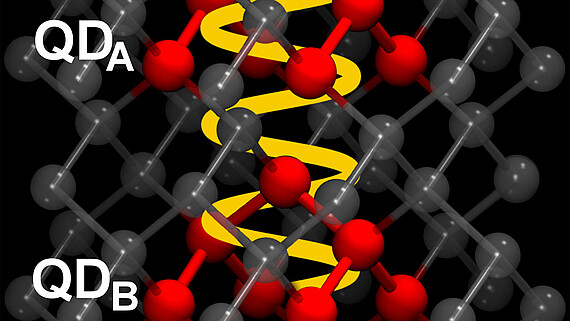
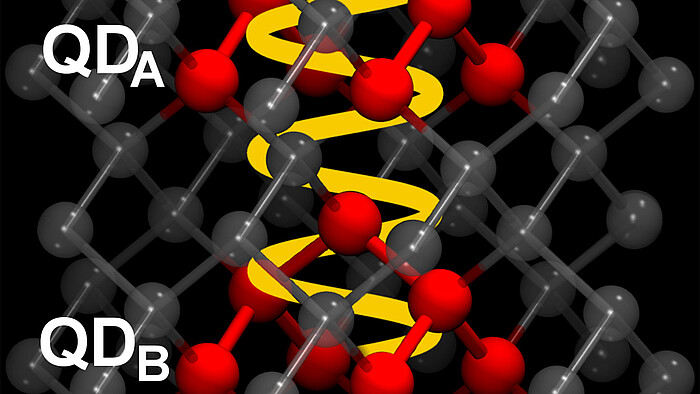
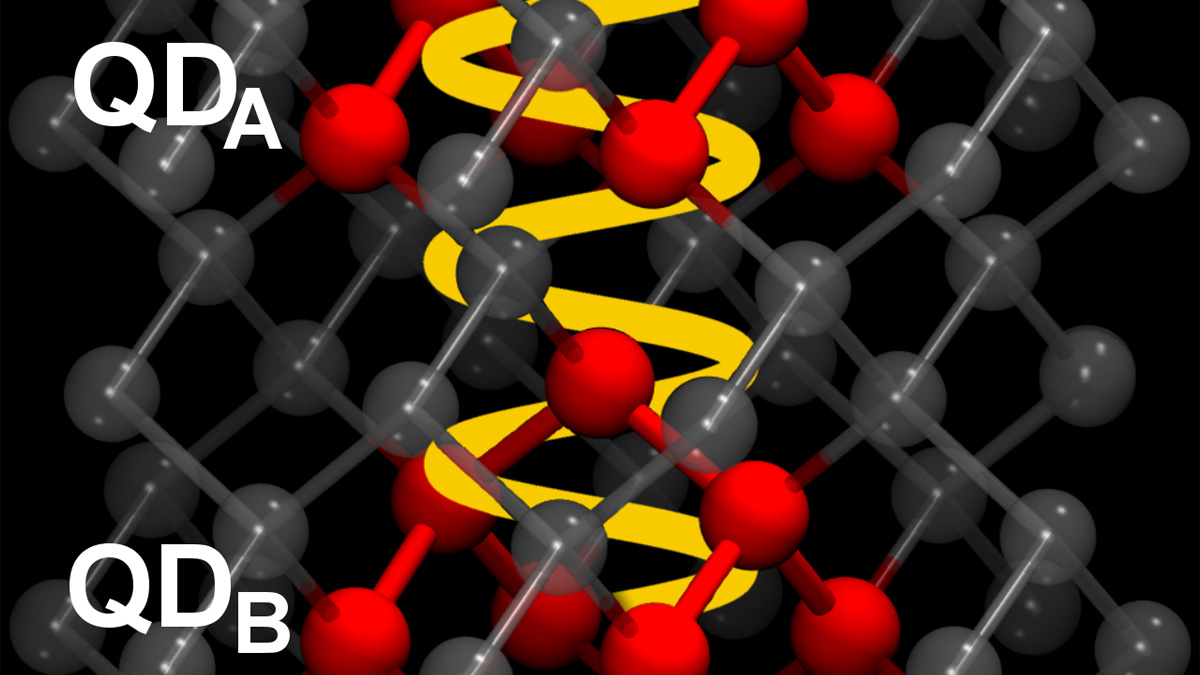
  • Light-induced exciton transfer in double quantum dots
  • Control of qubit states in silicon quantum dots

We are developing our own electron-dynamics software Jellyfish. It allows for advanced excitation visualization and execution on quantum-computer hardware, while a machine-learning method is developed as a data-scientific complement to quantum dynamics.

Literature:

"Developing Electron Dynamics into a Tool for 21st Century Chemistry Simulations", A. Bande, Chemical Modelling 17, 91 (2023), 10.1039/9781839169342-00091

"Elektronendynamiksimulation mit Wellenfunktionen für Materialanwendungen", A. Bande, Trendbericht Theoretische Chemie, Nachrichten der Chemie 72, 48 (2024), doi.org/10.1002/nadc.20244145393

"JELLYFISH: a modular code for wave function-based electron dynamics simulations and visualizations on traditional and quantum compute architectures", F. Langkabel, P. Krause, A. Bande, WIREs Comput. Mol. Sci. 14, e1696 (2024), 10.1002/wcms.1696. Software: https://github.com/FabianLangkabel/Jellyfish

"Inter-particle Coulombic Decay of Highly-excited Resonance States: A Study on Competing Relaxation Mechanisms", S. Marando, A. Bande, J. Chem. Phys. 163, 024124 (2025); DOI: 10.1063/5.0268255.

"Impact of the nuclear motion on the interparticle Coulombic electron capture", F. M. Pont, A. Bande, E. Fasshauer, A. Molle, D. Peláez, N. Sisourat, Phys. Rev. A 110, 042804 (2024), DOI: 10.1103/PhysRevA.110.042804.

"Proton-Coupled Electron-Transfer Dynamics of Water Splitting at N-Doped Graphene Oxides", F. Weber, J. C. Tremblay, A. Bande, J. Phys. Chem. C, 124, 26688 (2020), pubs.acs.org/doi/10.1021/acs.jpcc.0c08937


Nanostructures for Advanced Functional Materials

Image Image Image

This research aims to exploit the unique properties of nanostructures at surfaces and interfaces to develop advanced materials with applications in energy harvesting, quantum technology, and molecular electronics. By studying the electronic and optical properties of materials at the nanoscale, we seek to reveal new and intriguing behaviors that can lead to major advances in technology, such as improving solar cells or designing quantum devices. We study hybrid organic–inorganic systems with an emphasis on using machine learning to model interactions and guide the design of advanced functional materials. Nanostructures like quantum dots are studied atomistically as well as through model potentials.
We apply advanced wavefunction-based electron-dynamics methods to understand fundamental energy transfer processes among different nanoparticles. These studies include processes such as inter-particle Coulombic decay (ICD) or charge separation in quantum dot arrays. In addition, we explore hybrid organic–inorganic systems with state-of-the-art machine-learned force fields and multiscale simulations, bridging the gap between atomistic models and practical, scalable methods.

Literature:

"Early dynamics of the emission of solvated electrons from nanodiamonds in water", F. Buchner, T. Kirschbaum, A. Venerosy, H. Girard, J.-C. Arnault, B. Kiendl, A. Krueger, K. Larsson, A. Bande, T. Petit, C. Merschjann, Nanoscale 14, 17188 (2022), 10.1039/D2NR03919B

"Atomistic Simulations of Laser-controlled Exciton Transfer and Stabilization in Symmetric Double Quantum Dots", P. Krause, J. C. Tremblay, and A. Bande, J. Phys. Chem. C 125, 4793 (2021), pubs.acs.org/doi/10.1021/acs.jpca.1c02501 

"Role of Dopants on the Local Electronic Structure of Polymeric Carbon Nitride Photocatalysts", J. Ren, L. Lin, K. Lieutenant, C. Schulz, D. Wong, T. Gimm, A. Bande, X. Wang, T. Petit, Small Methods, doi.org/10.1002/smtd.202000707

"Influence of surface chemistry on optical, chemical and electronic properties of blue luminescent carbon dots", J. Ren, F. Weber, F. Weigert, Y. Wang, S. Choudhury, J. Xiao, I. Lauermann, U. Resch-Genger, A. Bande, T. Petit, Nanoscale 11, 2056 (2019), doi.org/10.1039/C8NR08595A

"Quantum Size Effect Affecting Environment Assisted Electron Capture in Quantum Confinements", A. Molle, E. Berikaa, F. M. Pont, A. Bande, J. Chem. Phys. 150, 224105 (2019). doi.org/10.1063/1.5095999

"Electron Dynamics of Interatomic Coulombic Decay in Quantum Dots Induced by a Laser Field", A. Bande, J. Chem. Phys. 138, 214104 (2013) . doi.org/10.1063/1.4807611


Spectroscopy: Quantum-chemistry Calculations and Machine-learning Predictions

Image Image Image

Spectroscopic techniques leverage the interaction of the electromagnetic spectrum with matter to reveal structural, electronic, and optical properties. Quantum-chemistry calculations, can help in the interpretation of optical valence- and core-level spectroscopies such as:

  • UV/Vis spectroscopy to determine optical transition that can be triggered in laser experiments.
  • X-ray absorption spectroscopy (XAS) that reveals the local geometry of probed molecules
  • Resonant inelastic X-ray scattering spectroscopy (RIXS) that allows to measure the virtual states of a molecule

Whilst quantum-chemical calculations of spectra allow for a peak assignment, the computational cost can be a prohibitive to computing spectra of nanostructures. By combining quantum mechanical methods with machine learning (ML), we aim to make theoretical spectroscopy more powerful and easier to interpret at a significantly reduced computational cost. Our goal is to integrate experimental data and physical information into ML models and provide a first spectra assignment within the duration of the respective measurement.

Our target systems include d- and f-block compounds (e.g., transition metal complexes), which have a complex electronic structure due to partially filled orbitals, leading to unique optical and magnetic properties. Furthermore, nanostructures like graphene oxide and nanodiamond exhibit fascinating optical behaviors due to their reduced dimensions, and solid-state materials, such as high-entropy oxides and lithium-polymer cathods, are crucial for energy and electronic applications.

Literature: 

"Integrating Explainability into Graph Neural Network Models for the Prediction X-ray Absorption Spectra", A. Kotobi, K. Singh, D. Höche, S. Bari, R. Meißner, A. Bande, J. Am. Chem. Soc. 145, 22584 (2023), 10.1021/jacs.3c07513. Software: https://github.com/AI-4-XAS/XASNet-XAI, Data: https://zenodo.org/records/8276902

"Graph Neural Networks for Learning Molecule Excitation Spectra", K. Singh, J. Münchmeyer, L. Weber, U. Leser, and A. Bande, J. Chem. Theo. Comput. 18, 4408 (2022), 10.1021/acs.jctc.2c00255.

"Influence of surface chemistry on optical, chemical and electronic properties of blue luminescent carbon dots", J. Ren, F. Weber, F. Weigert, Y. Wang, S. Choudhury, J. Xiao, I. Lauermann, U. Resch-Genger, A. Bande, T. Petit, Nanoscale 11, 2056 (2019), https://doi.org/10.1039/C8NR08595A 

"Effect of Temperature and Pressure on the Optical and Vibrational Properties of Thermoelectric SnSe", I. Efthimiopoulos, M. Berg, A. Bande, L. Puskar, E. Ritter, W. Xu, A. Marcelli, M. Ortolani, M. Harms, J. Müller, S. Speziale, M. Koch-Müller, Y. Liu, L.-D. Zhao, U. Schade, Phys. Chem. Chem. Phys. 21, 8663-8678 (2019) – “2019 PCCP HOT Article”. https://doi.org/10.1039/C9CP00897G 

Head of the group

Annika Bande Annika Bande
Prof. Dr. Annika Bande
Address
Welfengarten 1A
30167 Hannover
Building
Room
Annika Bande Annika Bande
Prof. Dr. Annika Bande
Address
Welfengarten 1A
30167 Hannover
Building
Room